When you hear business skills for employability, think of a toolkit rather than a single tool. Employers today are not only looking for subject expertise or degrees. They want evidence that you can step into a workplace, contribute, adapt and grow.
As presented in a 2023 report by the National Library of Medicine (PMC), the most cited competencies for graduate employability include communication and leadership skills, problem-solving and critical thinking, teamwork and collaboration in business and digital and analytical skills. Adaptability and continuous learning were also noted as essential to long-term success.
In practice, these core competencies look like this:
Leadership is not confined to management titles. In modern workplaces, it is about influence, initiative and collaboration. Communication, similarly, is not just about speaking clearly but about listening actively and adapting your message to the context.
As highlighted in the 2023 National Library of Medicine report, communication remains one of the strongest predictors of employability, ranking consistently across studies of graduate performance. Employers expect graduates to express ideas persuasively and build positive relationships.
How students can build these skills:
- Volunteer to lead small projects or student society events.
- Practise presentations and accept feedback to strengthen confidence.
- Write regularly: articles, reflections or reports. Clear writing supports clear thinking.
- Mentor peers or juniors; teaching helps you master effective communication.
When you communicate well and demonstrate leadership qualities, you signal confidence, reliability and capacity for growth, traits that every employer values.
Modern employers seek graduates who can analyse, question and innovate. Problem-solving and critical thinking skills show that you can handle uncertainty, identify solutions and make thoughtful decisions.
As reported by the National Library of Medicine in 2023, problem-solving ranks among the top five capabilities influencing employability outcomes. Students who learn to evaluate options and make evidence-based judgments are better prepared for dynamic work environments.
Ways to develop these abilities:
- Approach coursework like a consultant: define the problem, analyse causes and propose solutions.
- Engage in business simulations and case studies that reflect real challenges.
- Reflect on past experiences: what went well, what did not and how you could improve.
- Read business news to see how companies adapt to changing conditions.
Employers want thinkers, not followers. Being able to assess situations critically makes you a dependable and proactive professional.
The ability to work confidently with technology and data defines modern employability. Digital and analytical skills give students the tools to gather insights, solve problems and make informed decisions.
As presented in a 2024 report by the academic research archive arXiv, combining digital proficiency with analytical reasoning significantly boosts employability potential across sectors.
How to develop these skills:
- Learn to use data tools such as Excel, Power BI or Tableau.
- Incorporate data-driven decision-making into your coursework.
- Use digital collaboration tools like Google Workspace or Slack.
- Stay informed about new technologies and trends shaping business.
Digital fluency signals that you can adapt quickly and leverage innovation, essential qualities in every industry.
No business succeeds in isolation. The ability to work together effectively is key to success in any field, whether it is marketing, finance, logistics or design. Students who demonstrate teamwork and collaboration in business gain a strong competitive advantage.
As noted by the National Library of Medicine’s 2023 employability review, teamwork consistently ranks among the most important skills in employer surveys.
Ways to strengthen teamwork:
- Volunteer for multi-disciplinary group projects.
- Take responsibility for your team’s shared success, not just your own.
- Practise conflict resolution and respectful feedback.
- Reflect after each group experience on what worked and what did not.
Good collaborators create trust and harmony, helping organisations achieve shared goals. Developing teamwork habits as a student sets the stage for success in professional environments.
Entrepreneurship and innovation skills
Innovation keeps businesses relevant, and entrepreneurial thinking keeps professionals agile. Entrepreneurship and innovation skills are about identifying opportunities, taking initiative and driving change, qualities that matter whether you are building a start-up or working within a global company.
As presented in a 2024 report by MDPI, students who develop an entrepreneurial mindset are more adaptable to evolving job markets and perform better in dynamic industries.
Practical ways to cultivate these skills:
- Join innovation challenges or business competitions to test creative thinking.
- Develop mini-projects or proposals that improve existing systems.
- Learn from startup stories and case studies.
- Embrace trial and error; treat failures as valuable learning experiences.
Individuals with an innovative spirit are noticed by employers for their ownership, creativity, and ability to put ideas into action.
Business management skills
Even early in your career, understanding how organisations operate provides a distinct advantage. By learning business management skills, students are able to better comprehend how marketing, operations, finance and human resources work together to bring about business success.
According to a Taylor & Francis report published in 2023, graduates with business management awareness transition faster into professional roles and show greater confidence in making organisational decisions.
Students can enhance these skills by:
- Taking foundational courses in business management, marketing or operations.
- Analysing case studies to understand why some companies succeed while others fail.
- Applying management principles to student projects, planning timelines, budgets and risks.
- Seeking internships to observe how managers make decisions in real workplaces.
Understanding management equips you to see the bigger picture and connect your contribution to overall organisational performance.
Professional development for students
The most sustainable employability advantage comes from self-improvement. Professional development for students means building the discipline to learn continuously, reflect and adapt.
As discussed in a 2024 MDPI study, lifelong learning is one of the strongest indicators of career resilience and long-term employability.
Students can strengthen this mindset by:
- Creating a personal development plan with yearly objectives.
- Keeping a learning journal after each internship or academic project.
- Seeking mentorship through professional or alumni networks.
- Building a digital portfolio showcasing achievements and lessons learned.
Professional growth ensures relevance and resilience throughout your career journey.
Building business skills for employability: the GBS Dubai perspective
In a fast-changing world, graduates need more than academic credentials. They need the mindset, adaptability and professional readiness to thrive in global workplaces. Strengthening business skills for employability helps students achieve this by building confidence and competence in areas employers consistently value most.
Employers across industries highlight communication and leadership skills, problem-solving and critical thinking, digital and analytical skills and teamwork and collaboration in business as must-have attributes. When combined with entrepreneurship and innovation skills, business management skills and continuous professional development for students, these create a strong foundation for success.
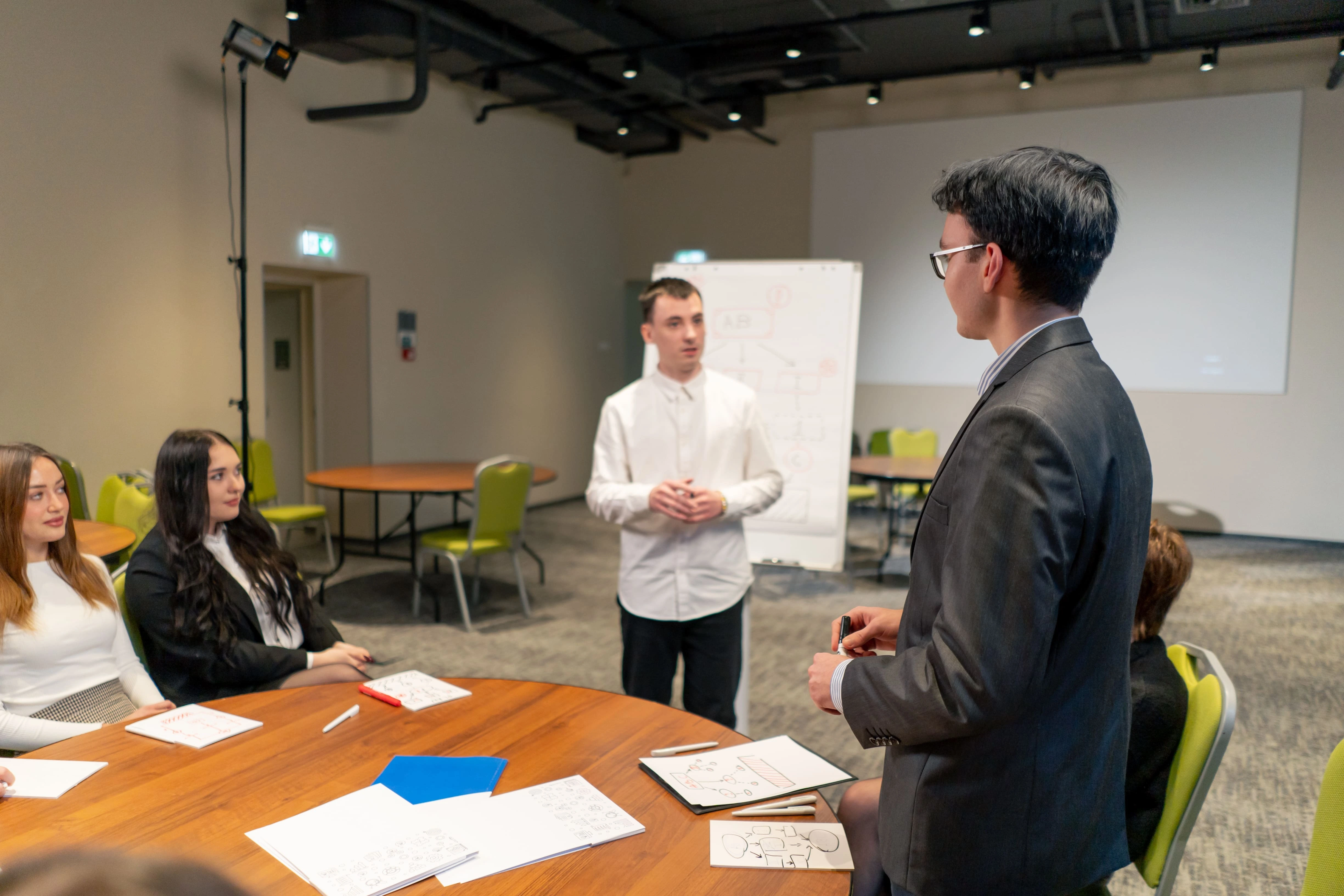
At GBS Dubai, students gain hands-on opportunities to develop these competencies through interactive workshops, real-world projects and internships with leading organisations. Every aspect of learning is designed to help students become confident, career-ready professionals who can stand out in a competitive global market.
Ultimately, business skills for employability are not optional. They are essential. They transform knowledge into impact and ambition into achievement. At GBS Dubai, every learner is empowered to develop this edge and unlock their future.