Many people begin ACCA without a finance background. Career switchers often come from fields such as:
- Teaching
- Engineering
- Marketing
- Administration
- Operations
Despite their different professional journeys, they usually share similar motivations:
- Seeking long-term career stability
- Looking for structured professional growth
- Wanting globally recognised financial expertise
For many professionals, ACCA offers exactly this combination. The qualification provides a clear pathway into finance while developing skills that remain valuable across industries and international markets.
Is ACCA suitable for beginners and non-finance graduates? Absolutely.
One misconception that stops people from exploring ACCA is the fear that it is only for those with a strong commerce or mathematics background. But in reality, ACCA has been designed to support learners who are starting from an entirely new foundation.
ACCA eligibility for non-finance graduates
If you have completed your secondary education or hold an undergraduate degree in any stream, you can start your ACCA journey. There is no requirement that you have previously studied accounting. The early levels of the syllabus introduce concepts slowly, ensuring you understand the logic behind each topic.
Is ACCA difficult for non-finance students?
The honest answer is that ACCA requires consistency and genuine effort, but difficulty depends more on your commitment than your past degree. Many non-finance learners start with doubt, only to find that the structured syllabus actually helps them excel. You learn business basics, accounting fundamentals and eventually progress to advanced financial management and strategic planning.
When taught well, the ACCA journey becomes much more manageable than people assume. It is one of the reasons why so many working professionals enrol in the qualifications each year.
How ACCA helps you transition into a finance career
Switching careers is not only about learning new concepts. It is about rethinking how you work, how you solve problems and how you add value to an organisation. ACCA does not simply train you for exams. It prepares you to think like a professional in a boardroom.
The following are the key reasons why ACCA works so well for career changers.
1. A flexible study structure that fits your life
Flexibility is one of ACCA’s strongest advantages for working professionals. If you have a full-time job, family responsibilities or other commitments, you can still take the qualification at your own pace.
You can study part-time, appear for exams only when you are ready and tailor your schedule around your work commitments. This level of control helps learners avoid burnout, especially those who balance multiple responsibilities.
ACCA’s flexibility for learners is one of the reasons the qualification attracts such a diverse age group. It is not uncommon to find students in their early twenties studying alongside professionals in their forties.
2. A step-by-step syllabus that builds confidence
If you are starting from a non-finance background, you need a structured path that teaches you everything from the ground up. The ACCA course does exactly that.
The syllabus begins with introductory subjects and moves steadily towards specialist areas. You do not have to jump into difficult papers immediately. Your understanding develops naturally over time.
The ACCA syllabus typically includes:
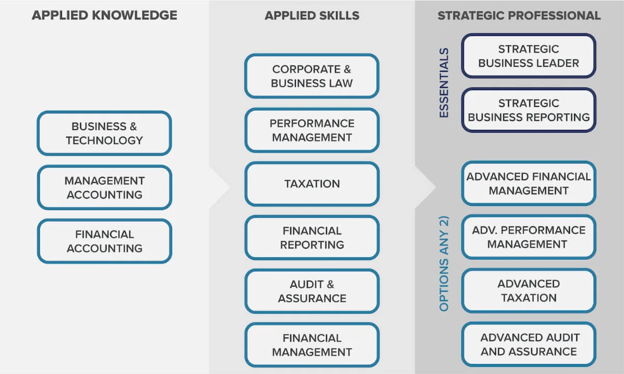
Applied knowledge
You begin with the basics: business principles, management concepts and introductory accounting
Applied skills
Next, you explore taxation, audit, corporate law and financial reporting. It is at this point that non-finance learners begin to feel like they are becoming finance professionals.
Strategic professional
Finally, you handle strategic decisions, advanced auditing and complex financial management. This is where you learn to think more like an advisor than an employee.
Every stage builds on the previous one, which makes the entire journey smooth and logical.
3. International recognition that opens up new opportunities
ACCA is a global accounting qualification accepted in more than 180 countries. For career-switchers who dream of working abroad or in multinational companies, this recognition is priceless.
As an ACCA member, you can pursue roles in:
- Finance and accounting
- Auditing
- Tax consultancy
- Business analysis
- Financial strategy
- Risk and compliance
The versatility of the qualification means you are not locked into a single career path. You can explore multiple roles depending on your interests and strengths.
4. A professional identity that stands out
Even if you started your academic life in a completely different field, ACCA helps you reshape how employers see you. With an ACCA qualification, your CV immediately communicates seriousness, discipline and long-term commitment.
For people worried that their degree may not reflect their current ambitions, ACCA acts as a powerful correction. It signals a shift in direction and gives you credibility in the finance world.
How long does ACCA take for beginners?
The time you take depends entirely on your learning style, work-life balance and how many exams you attempt each year. On average:
- Full-time learners may complete ACCA in 2.5 to 3 years
- Working professionals usually take around 3.5 to 4 years
- If you progress slowly, you can stretch the timeline to accommodate your lifestyle
Beginners with no finance background often worry they will be slower. In practice, many perform just as well as commerce graduates because they study with greater intention and motivation.
How to switch your career to finance with ACCA: a practical guide
If you are thinking about starting the ACCA journey, here is a realistic plan to help you begin confidently.
Step 1: Reflect on your motivation
Career change is emotional. Before you dive in, understand your personal reasons. Maybe you want a more stable career. Maybe you want a skill with long-term value. Maybe finance simply interests you more than your current field.
This clarity matters because it keeps you focused when the journey gets demanding.
Step 2: Start with the ACCA foundations level if needed
You can begin with the Foundations in Accountancy level if you would like an easier transition. It prepares you for the main ACCA qualification without pressure. Many non-finance graduates use this as a confidence-building phase.
Step 3: Join an institution that understands career-switchers
Your training environment matters. Look for a learning centre that offers:
- Personalised support
- Flexible class timings
- A clear understanding of how to teach beginners
- Guidance for working professionals
Institutions like GBS Dubai follow a methodical and supportive approach, especially for students from unrelated academic backgrounds.
Step 4: Build a consistent study habit
You do not need to study for long hours. A steady rhythm, even if slow, keeps you moving forward. ACCA rewards consistency more than any other skill.
Step 5: Attempt one exam at a time
There is no need to rush. Focus on mastering each paper. Once you earn your first pass, the confidence boost will carry you through the rest of the journey.
What a career in finance looks like after ACCA
Once you have completed the ACCA qualification, a wide range of career options become available. You can work with large corporations, banks, financial advisory firms, global audit companies or even launch your own consultancy once you gain enough experience.
Many ACCA professionals also move into leadership roles because job training sharpens their ability to analyse data, make decisions and understand business performance.
More importantly, ACCA gives you the power to redesign your financial future. Higher earnings potential, international mobility and professional respect often follow naturally.
The emotional side of choosing ACCA
People rarely talk about the emotional journey behind career shifts. Many students begin ACCA with mixed feelings. There is excitement, but also a fear of starting over. For some, work-study balance is a concern. Others wonder if they will be able to understand financial concepts.
However, something changes somewhere around the first or second paper. Learners begin to understand how accounting works. They see numbers as stories. They start recognising business patterns in their everyday life. This is the moment when confidence replaces doubt.
By the time they reach the final levels, they no longer feel like newcomers. They think, analyse and communicate like accounting professionals. And that transformation is the real value of ACCA. It does not just change your career path. It changes your identity.

Your background does not define your future
If you come from a non-finance background and are worried that it might hold you back, remember this. Many ACCA members today stood exactly where you are standing now. They had the same doubts, the same questions and the same fear of starting again.
What changed their story was one decision – the decision to begin.
ACCA is more than an accounting qualification. It is a future-building tool. It gives you a structured path, global recognition and the flexibility to learn on your own terms. Whether you want to work locally or build an international career, ACCA offers a solid foundation.
If you feel ready to step into a field with growth, stability and global respect, the ACCA qualification is a meaningful place to start. Your past does not limit you. Your decision today shapes what comes next.